Anyone who has shoveled a driveway in Erie County knows the snow here has its own personality. It comes sideways off the lake, stacks up wet and heavy, then locks up overnight when the mercury dips. The lake-effect bands can dump three inches in an hour on one street and leave the next block almost bare. Over time, that unpredictability shapes how you plan for the season. You stop thinking of snow as a series of storms and start treating it like a months-long project that rewards preparation and reliable help.
Driveway snow removal is the anchor of that plan for most homes. If the driveway is open by dawn, the rest of the day tends to go smoother. Kids get to the bus. You make first shift without a white-knuckle crawl down the street. Mail gets delivered, oil trucks can access the tank, and caregivers can reach your front steps. When the driveway stays buried, everything else bottlenecks. That real-world calculus is why residents and property managers in Erie lean on professional snow removal and why choosing the right approach matters.
What makes Erie snow different
Out-of-town crews sometimes underestimate the way lake-effect snow builds. The flakes can be fine and dry when the air is cold, turning into drifting powder that sails over driveway edges and fills in behind a plow. Other days the air is warmer and the snow falls thick and heavy, sticking to shovels and icing up boards. A single band can sit over northeast suburbs for hours while the west side sees a Turf Management Services snow plow service erie county light dusting. I have seen a driveway go from wet pavement to six inches of slush in the time it takes to run to Wegmans and back.
This inconsistency demands equipment that can pivot. It also forces a different service mindset. A one-and-done plow at 5 a.m. might not meet the moment if the bands reload at noon and again at 7 p.m. Many residential snow removal plans in Erie PA build in return visits when the storm total crosses a set depth, commonly three inches. That threshold fits the region’s rhythm, letting crews get through routes while keeping driveways from turning into rutted messes.
Driveways first, but not in isolation
Driveway snow removal is the core service most homeowners request. Yet it works best when you think a little beyond the asphalt. Plowed snow has to go somewhere. If you stack it too close to the mouth of the driveway, the street plows will push it back as a dense windrow that a sedan bumper cannot clear. If you pile it against the garage, meltwater will creep inside. Push it straight down a narrow drive and you bury the mailbox. An experienced operator sets snow to the downwind side, keeps piles lower near the road for sight lines, and leaves a cut at the curb so the mail carrier can reach the box.
The same logic applies to walkways and stoops. If the driveway is clean but the steps are a skating rink, guests and delivery drivers face a fall risk. A good residential snow removal plan in Erie PA covers the main walk, porch, and any path to fuel tanks or trash areas, not just the vehicle lanes. Clearing these in the right sequence avoids undoing work. For example, crews will often push the driveway first, then shovel or snowblow the walk so slough from the plow does not reclaim it.
Residential versus commercial: different stakes, different strategies
Residential snow removal is about access and safety for a family. The timing tends to center on early morning and late afternoon, with a secondary push during active bands. Commercial snow removal in Erie PA runs on a different cadence. Retail lots need continuous attention during business hours, medical offices require early and mid-morning service, and 24-hour facilities like warehouses or long-term care centers expect round-the-clock monitoring. Liability and traffic patterns drive decisions.
Equipment choices shift too. For commercial work, contractors stage multiple trucks, skid steers with pushers, and sometimes loaders to keep up with lot refills and to move piles away from traffic flow. For driveways, a well-equipped pickup with a straight blade or V-plow, a compact tractor with a front-mounted blower, or a walk-behind snowblower might be the right fit. When you evaluate a snow plow service in Erie County, ask how they balance residential routes against commercial commitments on heavy days. The honest ones will explain their prioritization and give you windows, not promises down to the minute.
The value of a licensed and insured snow company
Plenty of folks attach a plow to a half-ton truck and offer to take on a few neighbors. Some do a decent job. The risk shows up when something goes wrong. A contractor who is properly licensed and insured protects your property and theirs. Insurance should cover general liability and, for many crews, commercial auto and workers’ compensation. In real terms, this means if a plow slips on ice and clips your garage door, there is a path to repair without finger-pointing. It also means that operators have a stake in doing the work right, because their coverage often requires training and adherence to basic standards.
Licensing is not paperwork for its own sake. It signals the company is registered to operate where you live, pays taxes, and can be held accountable. In Erie County, many towns require permits for commercial snow removal. A licensed and insured snow company will know local rules about pushing snow into the street, burying hydrants, or blocking sidewalks. They also tend to keep better documentation of service dates and times, which can be invaluable if there is a slip-and-fall claim on your property.
What reliable driveway service looks like
Consistency is the first marker. A service that commits to plowing at two inches but shows up at five will disappoint you during the first decent storm. The second marker is judgment. An operator with thousands of driveways under their belt knows how to angle the blade to avoid ridge lines, when to back drag in front of garage doors, and how to clear tight turnarounds without chewing up the lawn. If you have pavers, a gravel drive, or a steep pitch, these decisions become even more important.
Communication matters more than most homeowners expect. Good crews send a preseason email that outlines trigger depths, approximate route times, add-on options for walkways or sidewalks, and policies for cars in the drive. During multi-day storms, they will post updates on route progress, sometimes with rough ETAs. When the city pushes a wall of snow back into the end of your drive at 9 p.m., the difference between a company that comes back for a cleanup pass and one that waves it off feels huge.
Equipment choices for Erie’s mix of snow
The right tool changes with conditions. On light powder days with steady winds, plows work quickly but can create tall berms that drift back over the drive. A tractor-mounted blower handles this better by launching snow farther into the yard, limiting ricochet and refill. After a slushy, wet snowfall followed by a temperature drop, the best approach often involves scraping down to pavement early, applying a deicer, and returning for a second clean-off before everything locks up.
On older concrete with surface spalling, steel edges can catch and cause damage. Some crews swap to poly or rubber cutting edges that glide over imperfections, trading a bit of scraping efficiency for surface protection. For gravel, the technique changes again. The operator keeps the blade just high enough to avoid scooping stones and often pushes snow in multiple shallow passes rather than one deep cut.
Battery-powered single-stage blowers have a place for walkways and small pads. They are quieter, less fume-heavy, and easier to maneuver on steps. For large drifts at the end of the drive after municipal passes, nothing beats a two-stage blower or a plow with the weight to break through the packed wall. I have stood behind a two-stage unit on a subzero morning and felt the difference a properly maintained auger makes. Dull shear pins or a bent scraper bar turn a 20-minute cleanup into an hour of frustrating half-bites.
Roof snow removal is not just for big storms
Erie homes with low-slope roofs, deep valleys, or northern exposures can gather more roof snow than you expect. When that load sits, it exerts thousands of pounds of force across trusses and can feed ice dams at the eaves. Roof snow removal in Erie is a specialty unto itself, and it comes with real risk if you climb and tug without a plan. The safest approach often uses a roof rake from the ground to pull down the first several feet of accumulation along the eaves, especially over the driveway and entry doors. That clearance reduces the chance of a heavy slide landing on a vehicle, a walkway, or a person.
Hiring out roof clearing makes sense after major events or when dams appear despite adequate insulation. Ask how the crew protects shingles, what anchors or fall protection they use, and how they control falling snow to avoid burying HVAC vents or blocking basement egress windows. A good company will coordinate roof work with driveway and walkway clearing, so you are not dealing with a fresh drift dumped across the drive after it was just cleaned.
Salt, sand, and the balance between traction and corrosion
People debate rock salt in Erie like they debate football. The short version: use the right material in the right amount at the right time. Sodium chloride is effective down to about 15 degrees Fahrenheit. Below that, calcium chloride or magnesium blends perform better. Treated salts that stick to the pavement reduce bounce and scatter, which saves money and limits lawn burn at the edges. Sand adds traction but does not melt, and it tends to track into the garage and house.
Homeowners sometimes throw a heavy layer of salt after a plow pass, expecting bare pavement in an hour. If it is ten degrees with a brisk wind, the salt will sit there and glare at you. A better practice is to apply at the trigger depth or before a refreeze, then reapply lightly after scraping if the surface begins to glaze. Many residential contracts offer a per-application price for deicing. If you have older concrete or decorative surfaces, ask for product types and dosages. Over-salting eats metal and ages concrete, and under-salting sets the stage for a freeze into polished ice.
Budgeting and contract structures that work in Erie County
Seasonal contracts smooth the highs and lows of our winters. You pay a set amount spread over the season, and the contractor takes on the risk of light or heavy snowfall. Per-push pricing is straightforward for occasional needs or low-snow winters, but it can jump in years when lake-effect bands park and reload. Many companies offer hybrid plans: a base seasonal rate that covers, say, up to 20 visits, with a per-push fee beyond that. Trigger depths vary, yet three inches is common for driveways, with optional two-inch triggers for those who need earlier access.
The part most people overlook: where your property sits on the route. A contractor might have a route optimized for speed that puts your house near the start after nighttime events and near the end after daytime snow. Ask about this in advance and decide whether it suits your schedule. If you must be out by 6 a.m. daily, say so. If the kids’ drop-off is flexible and you work from home, you may be fine with a later window and a lower price.
The realities of storm days
Erie’s big storms play out in waves. The forecast might call for 12 to 18 inches, but that often lands as three separate sessions of heavy rates separated by breaks. The smart move is to get the driveway cleaned down to the surface between waves, not just to carve a path. Otherwise the bottom layer compacts, bonds to cold pavement, and forms a stubborn base that laughs at shovels. When crews are stretched, they will prioritize a fast pass to keep things passable, then return for a shave down and treatment.
Be ready for the plow ridge from the city. It arrives late in the game and can undo an hour of work. Many snow plow services in Erie County bake in one return pass to reopen the apron after municipal plowing. Others offer it as an add-on. Clarify this detail at the start of the season. It is the single most common frustration homeowners voice, and it is solvable with clear expectations.
Edges, obstacles, and the art of not breaking things
Mailboxes at the edge of old concrete, low yard lights, shallow irrigation heads, landscape timbers, and decorative borders all suffer during winter. Flag these items before the first snowfall. Reflective driveway markers help operators stay true when visibility drops and wind piles across one side. For gravel drives, tall stakes every ten feet along the edge keep the blade off the lawn. If you have a metal grate over a French drain at the end of the drive, tell the crew. A steel edge can catch, bend the grate, and jolt the truck.
Back dragging near garage doors protects the door and avoids packing snow against the seal. Then the operator pushes the pulled snow out with the blade angled away from the house. This adds a couple of minutes but prevents ice from building at the threshold. Where the driveway meets the sidewalk, careful angle work leaves less spillage for the shovel crew and limits ridges that freeze after temperatures drop at night.

Safety, liability, and timing around schools and shift changes
If you live near a school bus stop, keep sight lines open by holding road-edge piles low near the driveway mouth. For shift workers, late-evening touches can be worth paying for in big storms. A quick cleanup pass between 9 and 11 p.m. can split the difference between a 15-minute exit and a 45-minute dig before a night shift. Many residential snow removal Erie PA services now offer on-demand push notifications where you can request that late pass with a few taps. Availability depends on the thickness of the storm and crew capacity, yet the option is increasingly common.
Liability follows timing. If someone slips in your drive or on your walkway, documentation of service times and treatments matters. Licensed companies keep these records. It is not about building a legal defense as much as it is about knowing what happened when, and how to adjust for the next event. If you notice recurring refreeze at a specific stretch, ask for a targeted fix. Sometimes the cure is as simple as trimming a spruce that shades the drive or changing the pile location to redirect meltwater.
When to upgrade from a shovel to a service
Plenty of people enjoy clearing their own drive, at least for the first few storms. The calculation shifts with age, back history, and workload. A wet six-inch snowfall weighs roughly 13 pounds per cubic foot. A two-car driveway 40 feet long may require lifting and moving 2,000 to 3,500 pounds of snow in one session, sometimes twice a day. Add a windrow at the apron and the number spikes. The cost of an annual service measured against time, strain, and the chance of a strained back starts to look reasonable, especially in years when Erie racks up 90 to 120 inches.
I have watched neighbors tag-team a driveway with two shovels and a walk-behind blower while the plow truck across the street opened two drives and a shared lane in the same time. Both approaches can be right. If you choose to DIY, invest in an ergonomic shovel, keep deicer on hand, and pace the work. If you choose a service, do it early. Slots fill up with the first forecast of a banded event, and the best crews keep their routes intentionally tight.
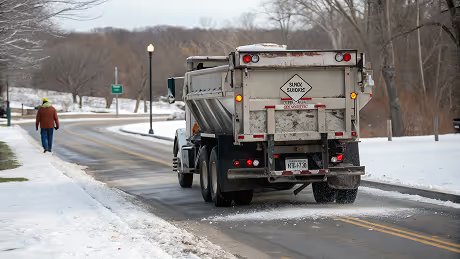
How to choose a snow plow service in Erie County
- Verify license and insurance, ask for certificates made out to you, and confirm the coverage includes snow operations. Ask about trigger depth, return passes after city plows, and whether walkway clearing is included or extra. Learn where you are on the route in different storm scenarios, and request windows rather than exact times. Review equipment types used for your driveway surface and any special considerations like pavers or steep grades. Check communication channels and response policies for mid-storm requests or blocked aprons.
Smart habits that keep a driveway clear longer
- Place reflective markers before the first snow to define edges and hazards for operators and yourself. Keep a five-foot buffer between piled snow and structures to reduce meltwater leaks and ice dams. Clear down to pavement when possible, then treat lightly, especially before the overnight temperature drop. Move vehicles off the drive before the crew arrives, and avoid parking at the mouth where city ridges form. After major storms, knock down roof overhangs with a rake to prevent roof slides from burying a freshly cleared apron.
What good looks like after the storm
Stand on the curb and look back at a driveway that was handled well. The apron opening is as wide as the drive, not a narrow cut. Piles sit where they do not block sight lines. The surface is mostly dry with a light grit or salt remaining, not a sheen of glaze. The walkway to the front door is fully open, not half-classed to save time. The mailbox is reachable without a high step. The lawn near the edge remains intact. This is the result of skill, not just horsepower.
You can tell a lot from the first big storm of the season. If the work looks rushed, have a conversation before the second event. Share specifics: the windrow refilled the apron, the right edge is drifting, the back drag needs a foot more away from the garage. The best providers welcome clear notes and adjust. The worst blame the weather. Erie’s weather will always be itself. Your job is to pick a partner who respects it.
The Erie way: plan, adapt, and keep the path open
Snow removal in Erie PA is not glamorous. It is a ritual that sits at the edge of daily life, sometimes demanding, sometimes quiet. Years that feel light still throw a few curveballs. Heavy winters test patience and equipment. The families and businesses that do well here accept the variable and build a simple framework around it. They hire a reliable, licensed and insured snow company or equip themselves correctly. They treat the driveway as the backbone of access and safety. They adjust tactics when the lake serves up powder one day and slush the next.
Driveway snow removal is the visible part, the piece your tires touch every morning. Do it right and the rest of winter feels manageable. Neglect it and every errand comes with a side of hassle. Whether you plow it yourself, hire residential snow removal, or coordinate commercial snow removal for a property you manage, the goal stays the same: clear paths that keep people moving and homes happy. The lake will do what it does. With the right plan, so will you.
Turf Management Services 3645 W Lake Rd #2, Erie, PA 16505 (814) 833-8898 3RXM+96 Erie, Pennsylvania